
Fighting For Jonah: How A Toddler Beat Pediatric Liver Cancer at CHRISTUS Children’s
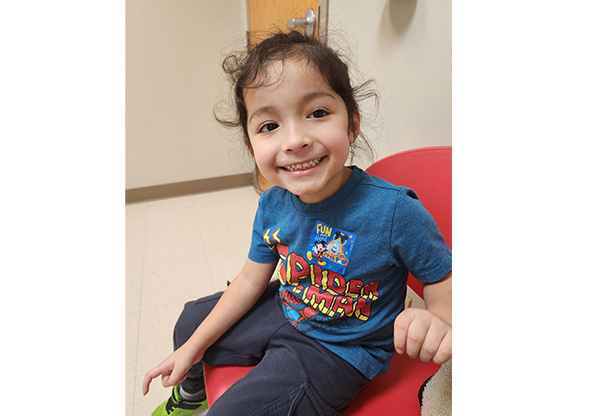
When Jonah Cervantes Garcia was 15 months old, his parents, Jasson and Denise, began to worry about small changes they were seeing in their son. He had frequent low-grade fevers, seemed unusually tired, lost interest in food and was fussier than usual.
Jasson and Denise’s instincts told them these symptoms were more than common toddler ailments, but they never imagined Jonah’s symptoms would lead to a diagnosis of hepatocellular carcinoma, or HCC, a rare and aggressive form of pediatric liver cancer.
“I had shared my concerns at Jonah’s 15- and 18-month checkups, but was assured that everything was fine,” Denise said. “At his 20-month checkup, I was determined to be heard and insisted on further testing.”
Jonah’s 20-month checkup was on a Monday in August 2022. By Wednesday, the family received results confirming Jonah’s liver was inflamed and were referred to a gastroenterologist. That Friday morning, Jonah had a CT scan.
“That afternoon, we got a call that Jonah was being admitted to CHRISTUS Children’s immediately,” Denise explained. “We were stunned to learn that the CT had revealed a mass on his liver. I started the week thinking maybe he had eaten a Lego or had a simple digestive issue, and then we were discussing cancer treatment.”
A Rare Diagnosis of Hepatocellular Carcinoma
Oncology experts at CHRISTUS Children’s arranged further testing to uncover the cause of his symptoms. Hepatoblastoma is the most common type of pediatric liver cancer, particularly at this age, so it came as a surprise when the biopsy confirmed a diagnosis of HCC.
While treatment for both types of cancer often includes chemotherapy, HCC can be more resistant and difficult to cure.
“It’s quite rare to see HCC in pediatrics, much less a toddler,” explained Dr. Julie Voeller, a pediatric oncologist at CHRISTUS Children’s. “We knew that we needed to act quickly and aggressively to help Jonah.”
Chemotherapy began immediately after confirming Jonah had HCC.
“He had a lot of nausea and vomiting and had to be admitted a few times for blood transfusions,” Denise recalled. “Getting him to eat was a regular challenge, so we would do anything we could to encourage him to eat—we even drove 40 minutes one way to pick up his favorite tacos.”
After every two rounds of chemotherapy, Jonah received an MRI to gauge the size of the tumor. While the treatments helped reduce the tumor, Dr. Voeller was concerned it wasn’t shrinking enough.
“What made Jonah’s case even more complex was that the tumor had grown into a major blood vessel near his heart, a condition called tumor thrombus,” Dr. Voeller explained. “That made a complete surgical removal of the tumor impossible, and it also meant that many hospitals couldn’t consider Jonah an ideal candidate for a liver transplant.”
“One transplant team told us they couldn’t help Jonah due to the stage of his cancer and the size of his tumor,” Jasson recalled. “I remember one of the physicians said to us, ‘We’re not God.’ We felt so hopeless at that point, but Dr. Voeller didn’t give up.”
Cancer & Blood Disorders Clinic
CHRISTUS Children's Cancer & Blood Disorders Clinic
CHRISTUS Children's Cancer & Blood Disorders Clinic in San Antonio provides specialized pediatric cancer care backed by expert teams, proven treatments, and personalized support for your child and family from day one.
Refusing to Give Up: Jonah’s Path to a Liver Transplant

Dr. Voeller reached out to a colleague in Houston about Jonah’s case.
“We have an incredible team here at CHRISTUS Children’s, and part of what makes our team special is that we’re willing to ask for help when we need it for complex cases,” Dr. Voeller said. “I have no hesitation reaching out to experts across the country and enlisting them in the fight alongside our children and their families. In Jonah’s case, consultation with specialized surgical and transplant teams would be critical for possibility of a cure.”
Jasson, Denise and Jonah headed to Houston, where Jonah underwent additional imaging and biopsies to determine if he qualified for a liver transplant. Once it was determined that Jonah’s cancer was still confined to the liver and due to his dire prognosis, he was placed at the top of the liver transplant list on March 7, 2023.
“We had a go bag packed and ready because we knew the call could come at any time,” Denise recalled. “Around 11 p.m. on March 12, we got a call that they had a possible liver for Jonah and that we needed to get to Houston by 3 a.m. We were out the door in 20 minutes.”
In the early morning hours of March 14, Jonah received his new liver. Over the next three months, Jonah grew stronger and completed two more chemotherapy treatments. On June 13, 2023, the family celebrated his full remission and soon returned home to San Antonio, where Dr. Voeller continued to support Jonah’s recovery and surveillance.
Paying It Forward
Today, Jonah is a thriving 4-year-old who loves playing with his big brothers and recently completed a pre-kindergarten program. His dad, Jasson, is using the experience of Jonah’s cancer journey to support other patients and their families at CHRISTUS Children’s, where he now works as a pediatric ICU nurse.
“The opportunity to work at CHRISTUS Children’s came up about five months after Jonah was diagnosed,” Jasson said. “I wanted to learn more about pediatrics so I could better care for Jonah, but I also wanted to help other families going through similar situations. Most of the patients and families I care for don’t know my personal story, but I know that I’m able to connect with them on a deeper level because of my own experience.”
“I bump into Jasson all the time, and I love hearing about Jonah,” Dr. Voeller said. “It brings me such joy to have been a part of Jonah’s care, and it makes me even happier to see the impact Jasson is having on our patients.”
“Now that I’m part of the CHRISTUS Children’s team, I get to see the passion and commitment that everyone brings every single day,” Jasson said. “We live for the moments where we can make a difference, and I’ll be forever grateful that my own child benefited from the care we provide.”
At CHRISTUS Children’s, no child or family walks through pediatric cancer care alone. From diagnosis to survivorship, our pediatric oncology team provides compassionate, personalized and innovative care to every child. Learn more about pediatric oncology at CHRISTUS Children's.
